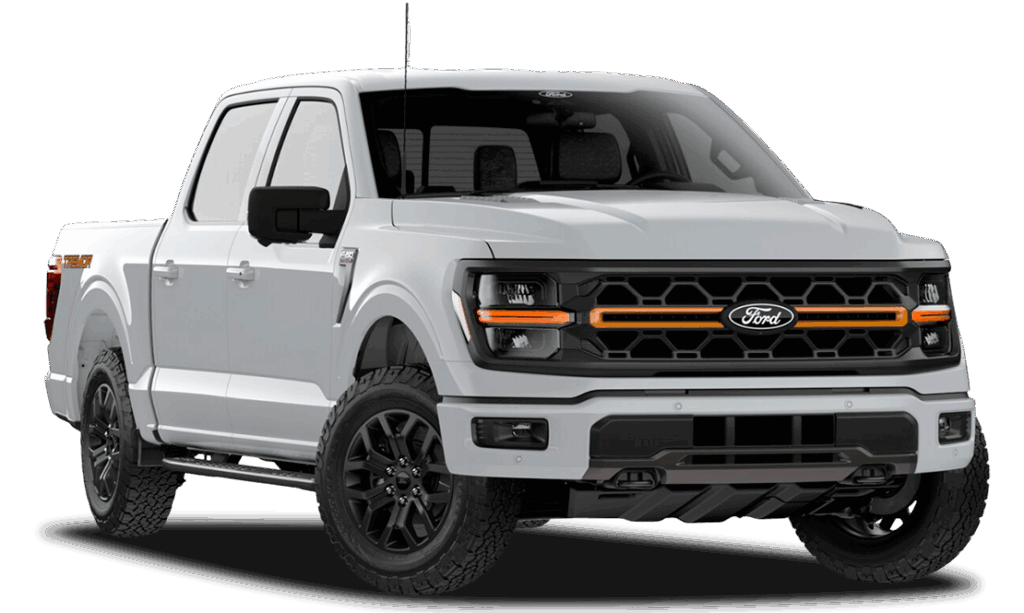
2026 F-150 towing capacity reaches an impressive 13,500 pounds when properly equipped, making it one of the most capable half-tonne trucks for Toronto drivers. Whether you’re hauling boats to Muskoka, pulling travel trailers for weekend getaways, or moving construction equipment across the GTA, understanding which configuration delivers the performance you need is crucial for confident towing.
As of 2025, the F-150’s maximum rating applies to specific powertrain combinations — not every truck achieves this capacity. Your actual capability depends on engine choice, towing package selection, and configuration details that directly impact what you can safely pull on Ontario roads.
This detailed guide examines every engine option, explains configuration requirements, covers real towing scenarios GTA drivers face daily, and details Ontario-specific regulations affecting truck owners. You’ll discover exactly which 2026 F-150 setup matches your hauling requirements.
Maximum 2026 F-150 Towing Capacity Specifications
Official Ford Canada Ratings
According to Ford Canada, the 2026 F-150 delivers 13,500 pounds maximum conventional towing capacity with optimal equipment packages. This rating positions it among the most capable half-tonne trucks available and makes it suitable for an extensive range of hauling tasks — from lightweight utility trailers to full-size travel trailers and substantial boats.
This maximum figure requires specific powertrain and configuration combinations rather than applying universally across all F-150 models. Your truck’s actual capacity varies based on engine selection, cab and bed configuration, axle ratio, and available towing packages.
Here’s what makes the difference: not all F-150s are built the same. The truck sitting on the lot might look identical to another, but under the hood and in the drivetrain, there are crucial differences that determine what you can actually pull.
What “Properly Equipped” Actually Means
The phrase “when properly equipped” appears with every truck towing specification because it represents essential distinctions. Reaching the F-150’s maximum 2026 F-150 towing capacity requires precise combination of components:
- Engine: 3.5L EcoBoost V6 unlocks the full 13,500-pound rating
- Axle ratio: Higher numerical ratios (such as 3.73) increase capability
- Towing package: Max Trailer Tow Package provides essential hardware upgrades
- Configuration: Different cab/bed combinations affect vehicle weight and capacity
Current equipment specifications must align perfectly to achieve maximum ratings. When configuring your F-150, communicate specific towing needs clearly with your sales team to build the right truck for your applications.
Think of it like ordering a custom suit — every detail matters. Miss one component, and you won’t get the performance you’re paying for.
Engine Options and Towing Performance Analysis
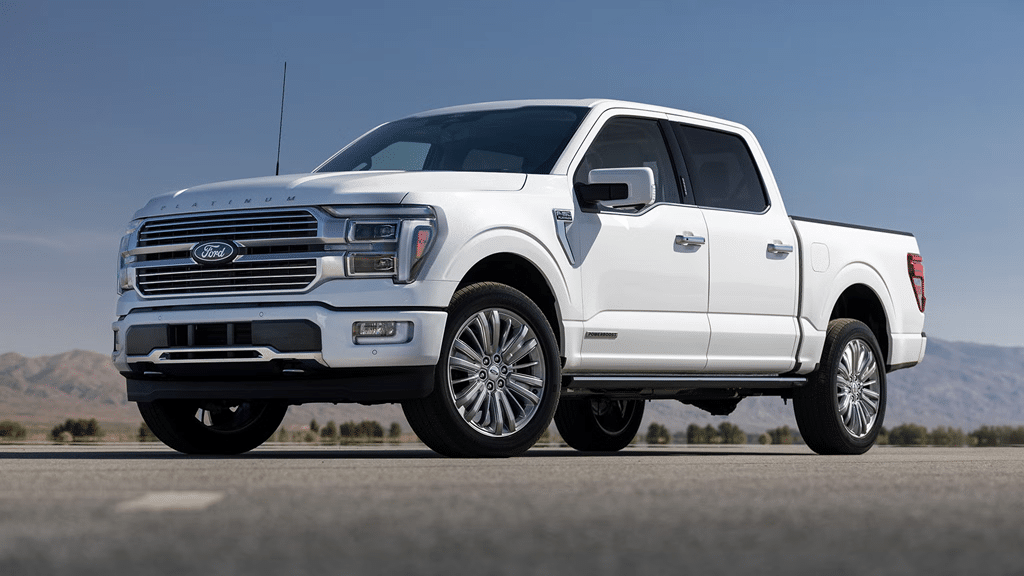
The 2026 F-150 offers multiple powertrains, each delivering different towing capabilities suited to various hauling requirements.
3.5L EcoBoost V6 — Maximum 13,500 lbs Capacity
This twin-turbocharged engine delivers the F-150’s maximum 2026 F-150 towing capacity of 13,500 pounds. Choose this powertrain when maximum hauling ability takes priority over fuel economy considerations.
Twin turbochargers provide robust low-end torque essential for heavy load acceleration and highway climbing with loaded trailers. The engine pairs with Ford’s 10-speed automatic transmission, maintaining optimal power delivery throughout towing operations.
This configuration suits drivers regularly hauling large travel trailers, substantial boats, or commercial equipment exceeding 10,000 pounds.
But here’s the reality: this engine drinks fuel. When you’re pulling a 12,000-pound trailer up the hills north of Barrie, you’ll appreciate every bit of that power. When you’re commuting empty to downtown Toronto, you’ll notice the difference at the gas station.
2.7L EcoBoost V6 — Up to 8,400 lbs Rating
The smaller displacement EcoBoost delivers up to 8,400 pounds towing capacity while providing better daily fuel efficiency. For many Toronto-area drivers, this capability handles most recreational and light commercial hauling requirements.
At 8,400 pounds capacity, you can confidently tow:
- Mid-size travel trailers and pop-up campers
- Most recreational boats with trailers
- Enclosed utility trailers for equipment transport
- Car hauler trailers with lighter vehicles
- Multiple snowmobile and ATV trailers
The 2.7L EcoBoost strikes an excellent balance between capability and efficiency for occasional towers.
This engine makes sense if your heaviest load is that 24-foot travel trailer you take to Algonquin twice a year. The rest of the time, it’ll sip fuel while handling your daily driving needs.
PowerBoost Hybrid — Up to 11,200 lbs Capability
The PowerBoost full hybrid system combines 3.5L EcoBoost power with electric motor assistance for 11,200 pounds maximum capacity. This represents compelling middle-ground performance for drivers wanting serious capability alongside improved fuel economy.
The hybrid system’s electric motor provides instant torque during acceleration, making loaded trailer departures smooth and controlled. When not towing, PowerBoost delivers some of the segment’s best fuel efficiency.
Additional PowerBoost advantage: available Pro Power Onboard generator supplies up to 7.2 kilowatts exportable power for tools, camping equipment, or emergency home backup during Ontario ice storm outages.
The hybrid system shines during stop-and-go GTA traffic. Electric assist helps with fuel economy, and that onboard power generation capability? Game-changer for contractors or serious campers.
Engine Selection Guide for Toronto Applications
Your ideal engine depends on towing frequency and load requirements:
- Choose 3.5L EcoBoost for regular heavy hauling — large trailers, substantial boats, commercial equipment
- Choose 2.7L EcoBoost for occasional moderate loads with priority on daily fuel economy
- Choose PowerBoost Hybrid for strong capability plus optimal efficiency and onboard power generation
Still evaluating options? The experienced team at Yorkdale Ford can recommend configurations based on your specific 2026 F-150 towing capacity requirements.
Real Toronto Towing Applications and Scenarios
Specification numbers matter less than practical application in your daily life. Here are common scenarios GTA drivers encounter regularly.
Cottage Trips to Muskoka — Travel Trailers and Boats
Highway 400 north represents Ontario’s busiest cottage towing corridor, with thousands of trailers heading to Muskoka every weekend. For 24-to-28-foot travel trailers (typically 5,000 to 7,500 pounds loaded), the 2.7L EcoBoost or PowerBoost Hybrid provides confident capability. Larger trailers exceeding 8,000 pounds require the 3.5L EcoBoost’s maximum capacity.
Boat owners targeting Lake Muskoka, Lake Simcoe, or Georgian Bay find most recreational boats fall well within F-150 capabilities. A typical 20-foot bowrider with trailer weighs approximately 4,500 to 5,500 pounds — manageable for any engine configuration.
But let’s talk about the real experience. Friday afternoon on the 400 north, traffic’s crawling, and you’re pulling a 6,500-pound trailer. Stop-and-go traffic tests your truck’s cooling system and your patience. This is where proper equipment packages matter most.
The hills around Gravenhurst separate the properly equipped trucks from the struggling ones. You’ll see overheated vehicles on the shoulder — don’t let that be you.
Recreational Hauling — ATVs, Snowmobiles, and Equipment
Ontario’s four-season recreational activities keep trucks busy year-round with diverse hauling requirements. Summer ATV trips to northern trails transition to winter snowmobile excursions to Haliburton or Parry Sound areas.
Double snowmobile trailers with two machines typically weigh 1,500 to 2,500 pounds. Enclosed ATV trailers carrying multiple machines range from 3,000 to 4,500 pounds. Every F-150 engine option handles these recreational loads comfortably.
Here’s where the F-150 really shines for Toronto owners. Your weekend load might be two snowmobiles heading to Collingwood. Next month, it’s the boat heading to Lake Simcoe. The versatility matters when you’re paying truck payments year-round but only towing seasonally.
Construction and Commercial Equipment Transport
Toronto’s active construction industry means numerous F-150 owners rely on their trucks for commercial applications. Flatbed trailers, enclosed tool trailers, and utility configurations are daily sights throughout the GTA.
Most single-axle utility trailers loaded with tools and equipment fall between 3,000 and 6,000 pounds. Heavier equipment trailers pushing past 10,000 pounds require the 3.5L EcoBoost’s maximum 2026 F-150 towing capacity.
The reality of commercial use: you’re not just pulling weight, you’re doing it daily. In Toronto traffic. With expensive equipment on board. Reliability becomes crucial, and that’s where Ford’s reputation pays dividends.
Urban Moving and General Hauling
Even occasional towers appreciate F-150 versatility for apartment moves, landscaping projects, or furniture transport across the city. Standard rental trailers from local shops rarely exceed 3,000 pounds loaded, making any F-150 configuration suitable for these tasks.
That U-Haul trailer for your kid’s university move? Any F-150 handles it easily. The challenge isn’t weight — it’s navigating downtown Toronto streets with a trailer behind you.
Ontario Towing Regulations and Legal Requirements
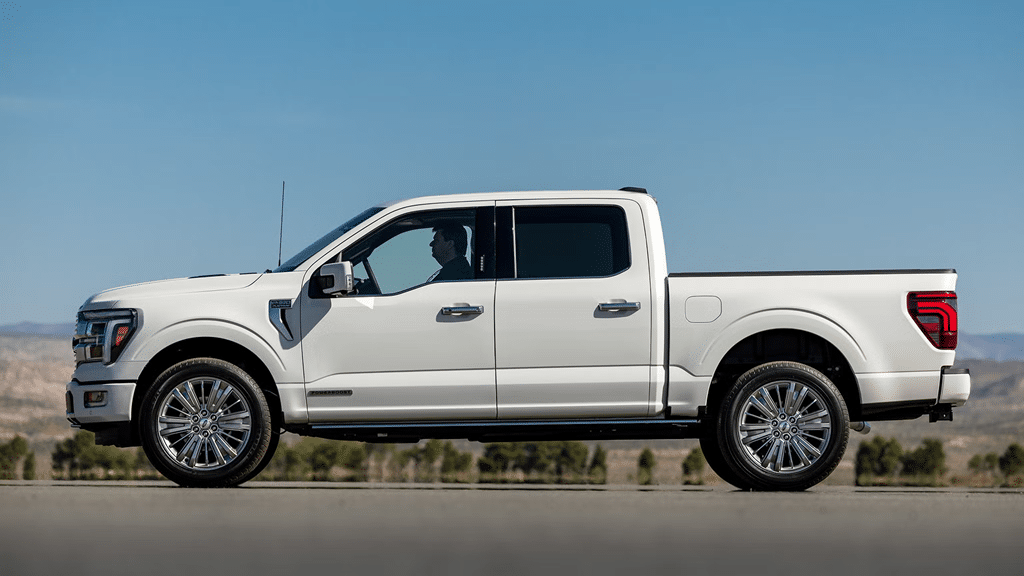
Understanding provincial towing regulations prevents fines and ensures safe operation on Ontario roads.
Trailer Registration and Licensing
In Ontario, trailers exceeding 1,300 kilograms (approximately 2,866 pounds) gross weight require Ministry of Transportation registration and valid licence plates. Lighter trailers avoid registration requirements but must meet safety equipment standards including proper lighting, reflectors, and safety chains.
Most recreational trailers trigger this requirement. That travel trailer for cottage season? You need plates. The good news: registration isn’t expensive, but skipping it brings hefty fines during OPP safety blitzes.
Driver Licensing for Heavy Combinations
Your standard G-class licence covers most recreational and light commercial towing applications. However, combined vehicle and trailer weights exceeding 11,000 kilograms may trigger additional licensing requirements. For the vast majority of F-150 owners, G-class licensing provides adequate coverage.
This catches some commercial users by surprise. Add your loaded F-150 weight to your loaded trailer weight. If the total exceeds 11,000 kg, you need different licensing. Most recreational applications stay well below this threshold.
Mandatory Safety Standards and Equipment
Ontario requires all road-operated trailers meet specific safety standards:
- Brakes: Trailers over 1,360 kg gross weight need independent braking systems
- Lighting: Functional tail lights, brake lights, and turn signals are mandatory
- Safety chains: Required as secondary connection between truck and trailer
- Visibility: Clear rear and side visibility — aftermarket towing mirrors may be necessary
The 2026 F-150’s available integrated trailer brake controller simplifies connection to electric-brake trailers and comes standard with the Max Trailer Tow Package.
Here’s what matters: OPP officers know these requirements. During cottage season, they run regular safety blitzes on Highway 400 and other major routes. A $200 safety chain fine ruins your weekend before it starts.
Essential 2026 F-150 Towing Packages and Technology
Max Trailer Tow Package Specifications
The Max Trailer Tow Package represents the most important option for serious towing applications, bundling essential upgrades for safe heavy hauling:
- Upgraded hitch receiver with higher-rated hardware
- Integrated trailer brake controller for seamless operation
- Enhanced engine and transmission cooling systems
- Higher-capacity radiator for sustained performance
- Upgraded rear axle with optimal towing ratios
- Pro Trailer Backup Assist technology (on equipped models)
This package transforms a capable truck into a purpose-built towing machine and is required for maximum capacity ratings.
Skip this package, and you’re leaving capability on the table. More importantly, you’re compromising safety when pulling heavy loads through Ontario’s challenging driving conditions.
Advanced Towing Technology Features
The 2026 F-150 offers sophisticated towing technologies that reduce stress and improve safety:
- Pro Trailer Backup Assist: Simple knob control for precise trailer reversing — eliminates confusion of traditional steering techniques
- Trailer Reverse Guidance: Camera-based system with path guidelines for accurate backing
- Smart Hitch: Measures tongue weight to ensure proper trailer loading
- Blind Spot Information System with Trailer Coverage: Extends monitoring to account for trailer length
These practical technologies make towing easier and safer in challenging GTA traffic conditions and tight recreational area access.
Pro Trailer Backup Assist might sound gimmicky, but try backing a 28-foot trailer into a tight campground site with other campers watching. The knob control system eliminates the steering confusion that trips up even experienced towers.
Expert Tips for Safe Toronto-Area Towing
GTA Traffic Considerations
Towing through Highway 401 or DVP during rush hour demands significantly increased following distances — at least double normal spacing. Heavy loads dramatically increase stopping distances and require earlier braking inputs.
Plan routes before departing, avoiding tight downtown streets when possible and choosing highways with wider lanes. Friday afternoon northbound Highway 400 traffic gets congested quickly during cottage season, so allow extra travel time.
The DVP with a trailer? Avoid it if possible. Those tight curves and aggressive drivers don’t mix well with trailer combinations. The 401 gives you more space and escape routes when traffic gets unpredictable.
Rush hour towing requires zen-level patience. That car cutting you off has no idea you need 150 metres to stop safely. Drive defensively and leave early.
Winter Towing in Southern Ontario Conditions
Toronto winters create unique towing challenges where slippery roads amplify every steering, braking, and acceleration input. Gentle control becomes critical when pulling trailers on snow or ice-covered surfaces.
Key winter towing strategies include:
- Reduce speeds well below posted limits in poor conditions
- Increase following distances to minimum four seconds
- Install quality winter tyres on truck and trailer when applicable
- Inspect trailer lights and connections before each trip (salt corrodes electrical components)
- Allow extended warm-up time in extreme cold
Winter towing in Ontario tests everything. That weekend ski trip to Blue Mountain during a snowstorm? Your truck needs to handle Highway 400 hills with reduced traction while pulling your snowmobile trailer.
Electronic trailer brake controllers work differently in extreme cold. Test your brakes in a safe area before hitting busy highways. Salt spray destroys electrical connections faster than you’d expect.
F-150 Towing Maintenance Requirements
Regular towing increases mechanical demands, making consistent maintenance crucial for reliable performance:
- Follow Ford’s recommended service schedule for towing duty
- Monitor transmission fluid condition more frequently
- Inspect brake components regularly if towing often
- Maintain cooling system in optimal condition
- Have hitch and electrical systems inspected during service visits
The experienced service team at Yorkdale Ford understands towing demands and can recommend appropriate maintenance intervals for your usage patterns.
Towing ages your truck faster than normal driving. That’s not Ford’s fault — it’s physics. Heat, stress, and additional weight affect every system. Stay ahead with proactive maintenance rather than dealing with roadside failures.
Transmission fluid turns dark quickly under towing loads. Check it regularly and change it more frequently than Ford’s standard schedule if you tow often.
Find Your Optimal 2026 F-150 at Yorkdale Ford
Selecting the right F-150 configuration for your 2026 F-150 towing capacity needs starts with understanding your specific hauling requirements and matching them to appropriate engines, packages, and options. This conversation begins with knowledgeable professionals who understand both truck capabilities and local driving conditions.
Yorkdale Ford maintains extensive 2026 F-150 inventory configured for various towing applications. Whether you need a work-ready SuperCab with maximum capacity or a fully loaded SuperCrew with hybrid efficiency for weekend adventures, available options cover diverse requirements.
The sales team understands Toronto-area towing challenges. They know which configurations handle Highway 400 hills loaded, which packages prevent overheating in summer traffic, and which axle ratios work best for your specific applications.
Explore Yorkdale Ford’s complete 2026 F-150 selection to browse current inventory or contact the sales team to discuss which configuration matches your specific towing needs and budget considerations.
Frequently Asked Questions
What is the maximum 2026 F-150 towing capacity rating?
The Ford F-150 offers maximum conventional towing capacity of 13,500 pounds when properly equipped with the 3.5L EcoBoost V6 engine, Max Trailer Tow Package, and appropriate axle ratio. Other engine and configuration combinations deliver lower but substantial ratings — the 2.7L
Related Resources
- Browse Ford F-150 Inventory at Yorkdale Ford
- Book a Service Appointment
- Ford F-150 Buyer’s Guide for Toronto Drivers
- Differences: Ford F-150 Lariat and 2025 Model Same Trim
- Ford F-150: Identify Warning Sounds That Need Attention
Disclaimer: Content contained in this post is for informational purposes only and may include features and options from US or international models. Please contact the dealership for more information or to confirm vehicle, feature availability.

