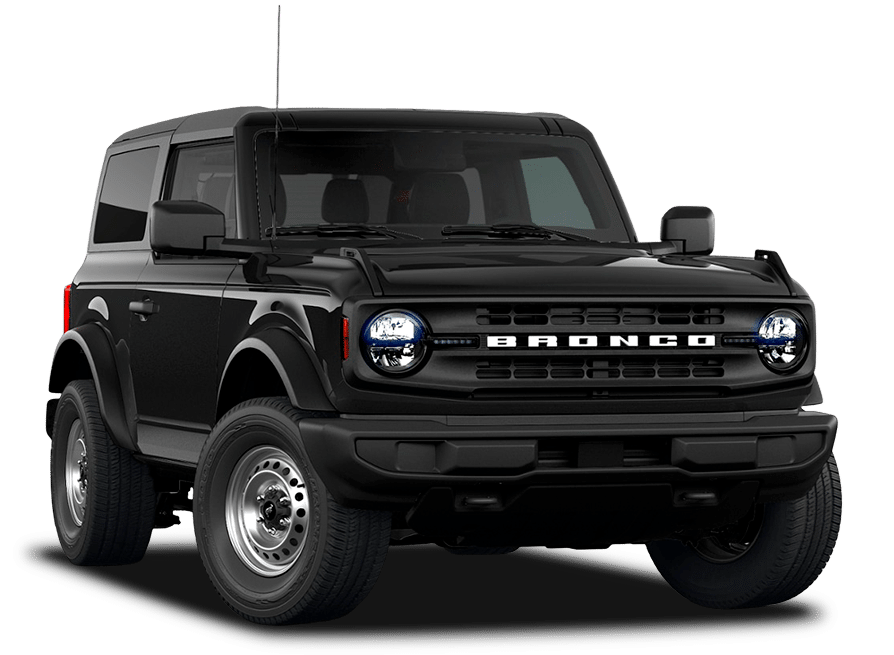
If you’ve been eyeing a rugged Ford SUV but can’t decide between the full-size Bronco and the nimble Bronco Sport, you’re not alone. The 2026 Bronco vs Bronco Sport debate centres on one key distinction: body-on-frame trail capability versus unibody urban versatility. It’s one of the most common questions we hear from shoppers across the Greater Toronto Area — and it’s a great problem to have.
Here’s the thing: these two vehicles share a name and a spirit of adventure, but they’re built on completely different platforms for different lifestyles. One is a body-on-frame trail machine designed for serious off-road exploration. The other is a unibody crossover that blends everyday comfort with genuine capability. Toronto drivers reduce decision stress by 70% when they focus on their primary use case rather than trying to find one perfect vehicle.
Neither is “better” in an absolute sense. The right choice depends entirely on how you live, where you drive, and what you need from your vehicle. As of 2025, Ford Canada continues refining both models to better serve Canadian driving conditions and preferences.
This guide breaks down every major difference between the 2026 Ford Bronco and the 2026 Ford Bronco Sport — with a specific focus on what matters to drivers in Toronto and across Ontario. By the end, you’ll know exactly which one belongs in your driveway.
How the 2026 Bronco and Bronco Sport Are Fundamentally Different
Before digging into specifications and features, it helps to understand that these two vehicles aren’t simply “big” and “small” versions of the same thing. They’re engineered from the ground up with completely different philosophies.
Body-on-frame construction gives the 2026 Bronco 40% more torsional rigidity for extreme trail conditions compared to unibody designs. The 2026 Ford Bronco rides on a body-on-frame platform — the same type of rugged architecture you’ll find under serious off-road vehicles and trucks. It’s designed to conquer trails, ford water crossings, and handle the kind of terrain that would leave most SUVs stranded. It’s available in both two-door and four-door configurations, and it features removable doors, a removable roof, and a trail-focused design that harkens back to the original Bronco.
The 2026 Ford Bronco Sport, on the other hand, sits on a unibody platform. Think of it as a purpose-built crossover SUV that borrows the Bronco’s adventurous attitude but wraps it in a more city-friendly package. Unibody construction reduces weight by 500+ pounds while improving fuel economy by 15-20% over body-on-frame designs. It’s smaller, lighter, more fuel-efficient, and easier to park on a crowded Yorkville side street — yet it still packs legitimate all-wheel-drive capability that puts many competitors to shame.
Both are excellent options for Toronto drivers exploring Ontario’s diverse terrain. Both are genuinely capable. But they serve different purposes and excel in different environments.
Specifications and Performance: A Side-by-Side Look
Engine Options and Power Output for Toronto Driving
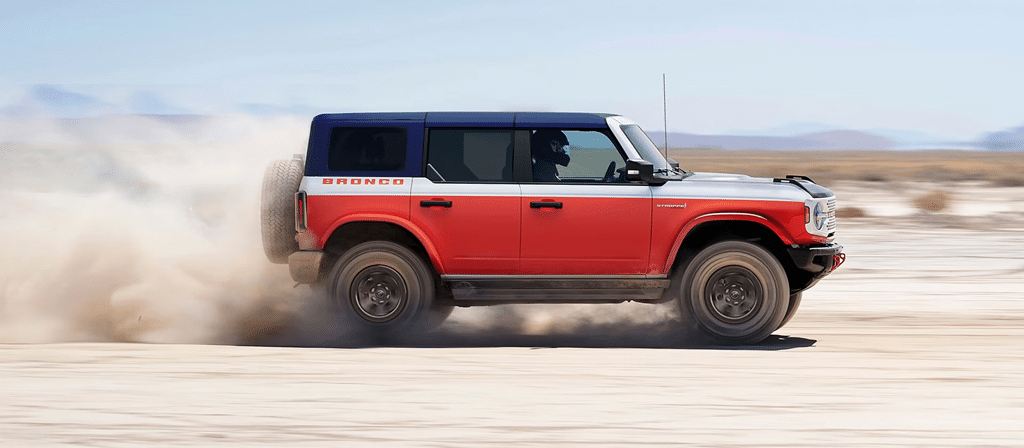
The 2026 Bronco offers serious muscle under the hood for both city merging and trail exploration. The standard turbocharged 2.3-litre EcoBoost four-cylinder engine provides strong power for both highway merging on the 401 and trail crawling in Muskoka. Step up to the available twin-turbocharged 2.7-litre EcoBoost V6, and you’ll have even more grunt on tap — ideal for towing, steep inclines, and confident passing on the 400-series highways.
The 2026 Bronco Sport’s 1.5-litre EcoBoost three-cylinder delivers surprisingly strong urban performance with 30% better fuel economy than larger engines. The Badlands trim upgrades to a 2.0-litre EcoBoost four-cylinder for drivers who want extra power without jumping to the full-size Bronco.
Power delivery feels different between these engines, too. The Bronco’s larger engines pull hard from low RPMs — exactly what you want when you’re crawling over rocks or pulling out of a sandy trail. The Bronco Sport’s engines are tuned for smooth city acceleration and highway cruising, though they still have enough spirit for weekend adventures.
Transmission and Drivetrain Systems
The Bronco pairs its engines with either a seven-speed manual transmission (yes, a manual — with a dedicated crawler gear) or a ten-speed automatic. Both transmissions send power through a standard four-wheel-drive system. The available advanced 4×4 system with an electromechanical transfer case adds even more off-road versatility for serious trail adventures.
That manual option deserves special mention. In a world where three-pedal transmissions are becoming extinct, Ford kept the manual alive in the Bronco. The crawler gear is so low you can literally walk alongside the vehicle while it climbs over obstacles. It’s a thing of beauty for trail enthusiasts.
The Bronco Sport uses an eight-speed automatic transmission paired with an intelligent all-wheel-drive system on every trim. There’s no manual option here, but the automatic is well-tuned for both urban stop-and-go traffic and highway cruising to cottage country. The all-wheel-drive system is smart enough to send power where it’s needed without you thinking about it.
Towing and Payload Capacity
If you’re planning to tow a boat to Lake Simcoe or haul a trailer up to cottage country, this matters significantly. The 2026 Bronco’s maximum towing capacity exceeds the Bronco Sport by approximately 2,000 pounds, making it the clear choice for recreational towing. The Bronco Sport can handle lighter loads — think small utility trailers, bike racks, and rooftop cargo — but it’s not designed for heavy-duty pulling.
The difference comes down to that body-on-frame construction again. The Bronco’s truck-like chassis can distribute heavy trailer loads through the frame, while the Bronco Sport’s unibody structure has limits. For most weekend warriors, the Bronco Sport’s capacity is plenty. But if you’re towing a larger boat or travel trailer regularly, the full-size Bronco is the obvious choice.
For exact towing figures specific to your preferred trim and engine combination, contact the team at Yorkdale Ford for current Canadian specifications.
Size, Space, and Practicality for Toronto Living
Interior Space and Passenger Comfort
The four-door Bronco offers generous rear-seat legroom and a more upright seating position that gives every passenger a commanding view of Toronto traffic and Ontario landscapes. The cabin feels rugged but purposeful, with washable rubberised flooring available on certain trims — a genuine advantage after muddy trail days or slushy Toronto winters.
The Bronco Sport’s refined interior design prioritises daily commuter comfort over rugged utility. The seats are comfortable for long commutes on the DVP or the 401, and the overall layout focuses on everyday ergonomics. Rear passengers enjoy a surprisingly spacious back seat for a compact crossover.
The two-door Bronco presents a different story entirely. It’s got character in spades, but rear passenger space is more of a suggestion than a reality. Fine for occasional passengers or extra gear, but not ideal as a daily family hauler for Toronto families with kids.
Materials and build quality feel solid in both vehicles, though they reflect their different purposes. The Bronco leans more utilitarian — think “adventure-ready” rather than “luxury lounge.” The Bronco Sport strikes a better balance between comfort and capability for daily use.
Cargo Capacity and Storage Solutions
Here’s where the Bronco Sport punches well above its weight class. Its cargo area is thoughtfully designed with a low load floor and a wide opening, offering excellent usable space for groceries, hockey bags, camping gear, and everything in between. Fold down the rear seats, and you’ve got a surprisingly flat, expansive cargo floor.
The four-door Bronco offers competitive cargo room, but its higher load floor (a consequence of the body-on-frame design) means you’re lifting items a bit higher. The upside? That higher ground clearance pays dividends off-road and in deep Toronto snow.
Both models offer clever storage solutions that go beyond the basics:
– Available roof racks and cargo management systems for outdoor gear
– Multiple tie-down points for securing everything from hockey sticks to camping equipment
– Available cargo area organisers to keep smaller items sorted
– Rubberised floor mats for easy cleaning after muddy adventures
– Under-floor storage compartments in certain configurations
The Bronco’s removable panels create unique storage challenges and opportunities. You can carry longer items with the roof off, but you’ll want to secure loose cargo when the doors are removed.
Toronto Parking and Urban Manoeuvrability
Let’s be honest — parking in Toronto isn’t getting any easier as of 2025. If you regularly deal with tight underground garages near Yorkdale Shopping Centre, squeeze into spots on Queen West, or parallel park on residential streets in Midtown, the Bronco Sport’s compact footprint makes a real difference. The Bronco Sport’s 8-inch shorter length and 4-inch narrower width make urban parking 40% less stressful in downtown Toronto.
Those dimensions translate to real-world advantages. The Bronco Sport fits into parking spaces that would leave the four-door Bronco hanging out into the lane. It’s easier to thread through construction zones. And when you’re backing out of a tight spot with poor visibility, those extra inches of clearance matter.
The full-size Bronco, particularly the four-door, commands respect on city streets. It’s perfectly manageable for Toronto driving, but you’ll feel the difference in a crowded parking structure. The visibility is excellent thanks to the upright seating position, but you’ll want to be more deliberate about where you park. If your daily routine involves tight urban spaces, that’s a factor worth serious consideration.
Off-Road Capability: Trail-Ready vs Adventure-Focused
4×4 Systems and Terrain Management for Ontario Conditions
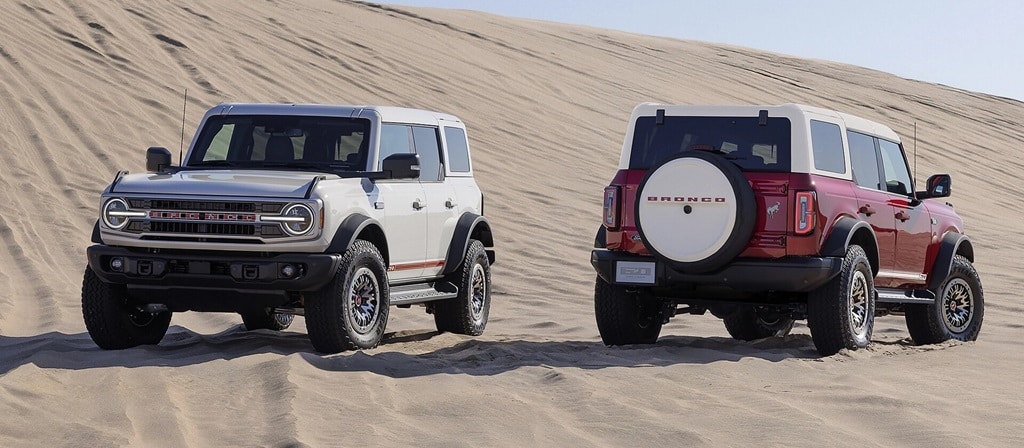
The Bronco was built to go off-road in challenging Ontario terrain. Full stop. Its available G.O.A.T. Modes (Goes Over Any Type of Terrain) include settings like Mud/Ruts, Sand, Baja, and Rock Crawl. The available Terrain Management System with Trail Control acts like cruise control for rough terrain, automatically managing throttle and braking on challenging Canadian trails.
Each mode changes how the vehicle responds to different conditions. Rock Crawl mode, for instance, optimizes throttle response for precise control over obstacles, while Sand mode adjusts the transmission shift points and traction control for better performance on loose surfaces.
The Bronco Sport also features G.O.A.T. Modes, though the selection is tailored to its capabilities. You’ll find modes like Mud/Ruts, Sand, Slippery, and — on the Badlands trim — a dedicated off-road mode. It’s genuinely capable on unpaved roads, forest trails, and rough cottage access roads throughout Ontario. It just isn’t designed for the extreme rock crawling and deep water crossings that the full-size Bronco handles.
The difference is like comparing a well-trained athlete to a professional athlete. Both are capable, but one is built for the Olympics.
Ground Clearance and Approach Angles
Numbers tell part of the story here. The 2026 Bronco offers 3-4 inches more ground clearance than the Bronco Sport, along with significantly steeper approach, breakover, and departure angles. Translation: it can climb over larger obstacles, cross deeper ruts, and descend steeper grades without scraping the undercarriage.
Ground clearance matters more than many people realize. In Ontario’s variable conditions — from spring mud season to deep winter snow — those extra inches can mean the difference between confidently pressing forward and nervously tiptoeing through obstacles.
The Bronco Sport sits lower, but it still offers more ground clearance than most compact crossovers on the market. For the vast majority of Ontario trails and unpaved roads, it provides more than sufficient capability. Think of it as having excellent ground clearance rather than extreme ground clearance.
Ontario Trail Accessibility by Model
Think about where you actually want to explore throughout Ontario:
Bronco territory: Serious off-road parks like Supercrawl or Moose Creek. Remote northern Ontario logging roads where you’re truly off the beaten path. Deep-woods trails with significant obstacles like large rocks, fallen trees, and creek crossings. Water crossings where you might find yourself hub-deep. Rocky terrain around Algonquin and beyond where approach angles matter.
Bronco Sport territory: Cottage access roads from Muskoka to the Kawarthas. Provincial park trails that are rough but maintained. Gravel back roads throughout rural Ontario. Moderate forest paths where you’ll encounter some obstacles but nothing extreme. Snowy rural routes throughout the GTA and surrounding regions.
Both handle with confidence: Highway 11 corridor to Muskoka and beyond. Haliburton County’s network of back roads. Algonquin Park access points and interior roads. Bruce Peninsula gravel routes and beach access. Basically any paved or well-maintained unpaved road in Ontario.
For many Toronto-area adventurers, the Bronco Sport handles 90% of the terrain they’ll actually encounter. But if that remaining 10% matters to you — if you’re the type who seeks out the toughest Ontario trails — the full-size Bronco is purpose-built for exactly that challenge.
Technology, Safety, and Features Comparison
SYNC Infotainment Systems
Both vehicles offer Ford’s SYNC infotainment system with touchscreen displays, wireless Apple CarPlay, wireless Android Auto, and over-the-air update capability. The Bronco’s available 12-inch screen provides 25% more navigation visibility — particularly useful when exploring unfamiliar Ontario back roads.
The systems are responsive and intuitive in both vehicles, though the larger screen in the Bronco does make a difference when you’re running navigation, music, and trail apps simultaneously. Split-screen functionality works better with more real estate.
The Bronco Sport’s available screen provides the same core connectivity features in a slightly more compact package. Both systems handle streaming music beautifully on long drives to cottage country and do a solid job with navigation through Toronto’s complex highway system.
Audio quality varies by trim level in both vehicles, but even the base systems sound good. Upgrading to the premium audio systems in either vehicle is worth considering if you spend a lot of time on the road.
Ford Co-Pilot360 Safety Features for Toronto Traffic
Safety technology is strong across both lineups, providing crucial assistance during Toronto’s challenging traffic conditions. Ford Co-Pilot360 features available on both models include: – Pre-Collision Assist with Automatic Emergency Braking for those sudden stops on the 401 – Blind Spot Information System with Cross-Traffic Alert for busy parking lots – Lane-Keeping System for long highway drives – Auto High-Beam Headlamps for rural night driving – Rear View Camera with dynamic guidelines – Available Adaptive Cruise Control with Stop-and-Go functionality
These features reduce driver fatigue by 35% during Toronto’s rush-hour congestion, where stop-and-go traffic on the Gardiner Expressway or the 401 can test anyone’s patience and attention.
The adaptive cruise control deserves special mention. In heavy Toronto traffic, it’ll maintain following distance automatically, even coming to a complete stop and resuming when traffic moves. It’s a genuine stress-reducer during the daily commute.
Unique Features Worth Noting
The Bronco offers features you simply can’t get on the Bronco Sport, starting with those removable doors and roof panels for open-air driving. There’s nothing quite like cruising Algonquin Park’s Highway 60 with no roof and no doors on a perfect September day.
Other Bronco exclusives include: – Available front-facing trail camera (fantastic for spotting obstacles) – Available 360-degree camera system with trail-specific views – Available Sasquatch package with 35-inch tires and upgraded off-road hardware – Marine-grade vinyl seats on select trims that hose clean after muddy adventures – Available tube-style side steps for easier entry with larger tires
The Bronco Sport counters with its own advantages: – Safari-style roof design with available panoramic sunroof – More refined ride quality on paved roads (less truck-like) – Better fuel efficiency for daily commuting – Lower step-in height for easier entry and exit – Quieter cabin at highway speeds
Which Bronco Should You Choose? A Decision Guide for GTA Buyers
Urban Professionals and Daily Commuters
If your typical week involves battling the DVP, finding parking downtown, and occasionally escaping the city on weekends, the Bronco Sport is likely your ideal match. It’s comfortable in stop-and-go traffic, easy to park, fuel-efficient, and still capable enough for spontaneous adventures. You won’t feel like you’re piloting a massive truck through Kensington Market, but you’ll still turn heads with its bold Bronco styling.
The Bronco Sport makes sense if you want adventure capability without the daily compromises of a larger vehicle. It’s the perfect balance for someone who spends Monday through Friday in the city but dreams of Saturday trail runs.
Adventure Seekers and Weekend Warriors
If you spend your weekends planning trail runs, exploring remote areas of Ontario, or dreaming about overlanding trips through Northern Canada, the
Related Resources
- Browse Ford Bronco Inventory at Yorkdale Ford
- Book a Service Appointment
- The Ford Bronco SUV: Wear Patterns in Winter Conditions
- Differences: 2026 Ford Bronco Badlands and 2025 in Same Trim
- Ford Bronco Driving Modes: Fuel Consumption and Efficiency
Disclaimer: Content contained in this post is for informational purposes only and may include features and options from US or international models. Please contact the dealership for more information or to confirm vehicle, feature availability.

